The Gilded Hammer and the Green Forge: How Sustainable Jewelry Competitions Are Forging a New Era of Ethical Craftsmanship

In the shimmering world of jewelry design, where tradition often dances with innovation, a quiet revolution is unfolding. The stage is no longer dominated solely by the brilliance of diamonds or the luster of gold; instead, it is the story behind each piece that is capturing the imagination of judges, collectors, and consumers alike. At the heart of this transformation are competitions like the Sustainable Jewelry Design Prize and the Upcycled Jewelry Challenge, which are redefining what it means to create beauty in the 21st century. These platforms are not just celebrating artistry—they are championing a movement where ethics and aesthetics intertwine, forging a path toward a more conscious and creative future.
The Rise of the Ethical Aesthete
The jewelry industry has long been associated with opulence, exclusivity, and, at times, environmental and ethical concerns. From conflict diamonds to unsustainable mining practices, the dark underbelly of luxury has cast a shadow over the craft. Yet, as awareness grows, so too does the demand for change. Competitions focused on sustainable and upcycled jewelry are emerging as beacons of hope, offering designers a platform to showcase their ingenuity while addressing these critical issues. These contests are not merely about creating visually stunning pieces; they are about reimagining the entire lifecycle of jewelry—from sourcing materials to production and beyond.
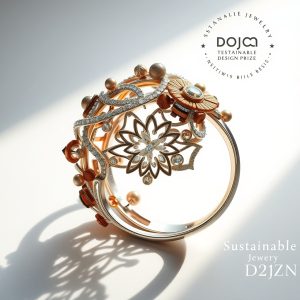
Take, for example, the Sustainable Jewelry Design Prize, which has gained international acclaim for its rigorous criteria. Designers are challenged to create pieces using ethically sourced materials, recycled metals, and lab-grown gemstones. The competition also emphasizes transparency, requiring participants to document their supply chains and production processes. This level of accountability is not just a trend—it is becoming the new standard, as consumers increasingly seek out brands that align with their values. The result? A new generation of designers who are as skilled in storytelling as they are in craftsmanship, weaving narratives of sustainability into every facet of their work.
The Alchemy of Upcycling: Turning Trash into Treasure
If sustainability is the philosophy, then upcycling is the practice that brings it to life. The Upcycled Jewelry Challenge is one such competition that has captured the imagination of designers worldwide. Here, the rules are simple: create something extraordinary from materials that would otherwise be discarded. Old electronics, broken jewelry, even industrial waste—nothing is off-limits. The challenge lies in transforming these forgotten fragments into pieces that are not only beautiful but also meaningful.
One standout example is a necklace crafted from discarded circuit boards, where the designer meticulously arranged the components to mimic the organic flow of a river. Another featured a ring made from reclaimed silver and a shattered smartphone screen, its fractured surface refracting light like a miniature galaxy. These pieces do more than dazzle; they provoke conversation. They challenge the notion of what luxury should look like in a world grappling with overconsumption and waste. By elevating discarded materials, designers are not just creating jewelry—they are crafting statements about the future we want to build.
The Role of Competitions in Shaping Industry Standards
Competitions like these are not just about crowning winners; they are about shifting paradigms. By highlighting the work of designers who prioritize sustainability, these platforms are influencing industry standards and inspiring established brands to rethink their practices. The ripple effect is undeniable. Major jewelry houses, once resistant to change, are now investing in ethical sourcing, recycled materials, and even launching their own sustainable collections. The message is clear: the future of jewelry is not just about what you create, but how you create it.
Moreover, these competitions serve as incubators for innovation. They provide emerging designers with the resources, exposure, and validation needed to turn their visions into reality. For many, winning or even participating in such a contest is a career-defining moment, opening doors to collaborations, exhibitions, and commercial success. The Emerging Jewelry Designer Contest, for instance, has become a launching pad for talent, with past winners going on to establish their own sustainable brands or secure positions with leading jewelry houses. In this way, competitions are not just reflecting change—they are driving it.
The Intersection of Artistry and Activism
What sets these competitions apart is their ability to merge artistry with activism. Designers are no longer just creators; they are advocates, using their craft to raise awareness about environmental and social issues. A piece that incorporates recycled plastic, for example, might spark a conversation about ocean pollution. A necklace made from fair-trade gold could highlight the plight of artisanal miners. In this way, jewelry becomes a medium for change, a wearable manifesto that speaks volumes without saying a word.
The Avant-Garde Jewelry Award is a prime example of this fusion. This competition celebrates pieces that push the boundaries of traditional design while addressing contemporary issues. Past entries have included jewelry that doubles as wearable technology, pieces that change color in response to environmental pollutants, and even designs that incorporate seeds, allowing the wearer to plant and grow flowers after the jewelry has served its purpose. These are not just accessories; they are tools for engagement, inviting the wearer to become part of a larger narrative of sustainability and innovation.
The Future of Jewelry: A Circular Vision
As the jewelry industry evolves, so too does the concept of luxury. No longer is it defined solely by rarity or expense; today, true luxury is measured by the story behind the piece, the ethics of its creation, and its impact on the world. Competitions like the Sustainable Jewelry Design Prize and the Upcycled Jewelry Challenge are at the forefront of this shift, championing a circular economy where materials are reused, repurposed, and celebrated. This vision extends beyond the competition stage, influencing how jewelry is designed, produced, and consumed on a global scale.
For designers, this new landscape offers both challenges and opportunities. The pressure to innovate is greater than ever, but so too is the potential for impact. By embracing sustainable practices, they are not just creating jewelry—they are shaping the future of the industry. And for consumers, the choices are becoming clearer. Each purchase is an opportunity to support a vision of luxury that is as kind to the planet as it is beautiful to behold.
The gilded hammer of tradition is being reshaped by the green forge of sustainability, and the result is a new era of jewelry design—one where ethics and aesthetics coexist in perfect harmony. As these competitions continue to inspire and challenge designers, they remind us that the most precious materials are not always the ones mined from the earth, but the ideas and values that shape our world. In this light, every piece of jewelry becomes a testament to the power of creativity to drive change, one sparkling innovation at a time.