The Velvet Hammer: How Jewelry Design Competitions Are Shaping the Intersection of Craftsmanship and Social Change

In the world of fine jewelry, where tradition often meets innovation, a quiet revolution is underway—one that is redefining not just the aesthetics of adornment but its very purpose. International jewelry design awards and global competitions are no longer merely platforms for showcasing technical skill or artistic flair. They have evolved into catalysts for social change, ethical discourse, and cultural transformation, where the velvet glove of beauty conceals the iron fist of progress. These competitions are where the future of jewelry is being hammered into shape, not just on the anvil of craftsmanship, but on the forge of societal values.
The New Benchmark: Beyond Aesthetics
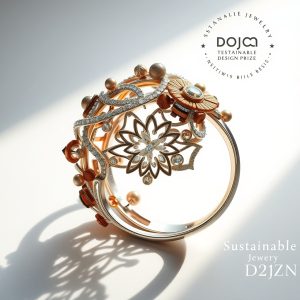
For decades, jewelry design competitions have celebrated the mastery of metalwork, the precision of gemstone setting, and the creativity of conceptual design. However, the criteria for excellence are shifting. Today’s most prestigious contests, such as the Sustainable Jewelry Design Prize and the Avant Garde Jewelry Award, are placing equal—if not greater—emphasis on the story behind the piece. Judges are now scrutinizing the ethical sourcing of materials, the environmental impact of production, and the social narratives embedded within each creation. A necklace is no longer judged solely on its brilliance but on the transparency of its supply chain. A ring’s value is measured not just by its carat weight but by the fair labor practices that brought it to life.
This evolution reflects a broader cultural shift. Consumers, particularly younger generations, are demanding accountability from the brands they support. They want to know that their luxury purchases are not tarnished by exploitation or environmental degradation. Jewelry design competitions have become a mirror held up to the industry, reflecting its progress—or lack thereof—in meeting these expectations. Winners of these contests are not just artists; they are ambassadors of change, proving that beauty and responsibility can coexist.
The Rise of the Ethical Artisan
One of the most exciting developments in contemporary jewelry competitions is the emergence of the ethical artisan. These designers are redefining what it means to be a craftsman in the 21st century. Take, for example, the Upcycled Jewelry Challenge, where participants are tasked with transforming discarded materials into objects of desire. The results are nothing short of alchemical: a brooch crafted from reclaimed ocean plastic, a bracelet forged from melted-down bullet casings, or a ring set with lab-grown diamonds that tell a story of innovation rather than extraction.
These competitions are also democratizing the industry. The Student Jewelry Design Contest and the Emerging Jewelry Designer Contest provide platforms for unknown talents to showcase their vision, often challenging the status quo. Many of these young designers come from backgrounds where sustainability is not just a trend but a necessity. Their work is a testament to the idea that jewelry can be both a personal statement and a political one. It can adorn the body while also advocating for the planet.
Crafting Narratives, Not Just Jewelry
What sets today’s most compelling jewelry designs apart is their ability to tell a story. The Concept Jewelry Competition and the Bespoke Jewelry Design Prize are pushing designers to think beyond the physical object and consider the narrative it carries. A piece might explore themes of migration, identity, or climate change, using materials and forms to evoke emotion and provoke thought. For instance, a designer might use recycled silver to craft a pendant shaped like a melting iceberg, a stark reminder of the urgency of environmental action. Another might create a necklace inspired by the patterns of traditional weaving, celebrating cultural heritage while supporting artisan communities.
These narrative-driven designs are not just winning awards; they are reshaping the conversation around what jewelry can—and should—be. They challenge the notion that adornment is frivolous, proving instead that it can be a powerful medium for storytelling and social commentary. In doing so, they elevate jewelry from mere accessory to a form of wearable art with the potential to inspire change.
The Global Stage: Where Cultures Collide and Collaborate
Jewelry design competitions are inherently global, bringing together artists from diverse backgrounds and traditions. The Contemporary Jewelry Exhibition and the Luxury Jewelry Design Selection serve as melting pots of cultural exchange, where techniques, materials, and philosophies from around the world intersect. A designer from Japan might incorporate the minimalist aesthetics of wabi-sabi into a piece that also features African beads, creating a dialogue between East and West. A goldsmith from Italy might collaborate with a gemstone carver from India, blending Renaissance craftsmanship with Mughal artistry.
This cross-pollination of ideas is not just enriching the art form; it is fostering a sense of global community. In an era where division often dominates the headlines, jewelry design competitions offer a counter-narrative—one of collaboration, mutual respect, and shared creativity. They remind us that art has the power to transcend borders, whether those borders are geographical, cultural, or ideological.
The Legacy of Innovation
At the heart of these competitions lies a fundamental question: What will the legacy of today’s jewelry designers be? The Legacy Jewelry Design Award and the Innovations in Jewelry Award seek to answer this by honoring those who are not just creating beautiful objects but are also pushing the boundaries of what jewelry can achieve. These awards celebrate designers who are experimenting with new materials, such as biodegradable resins or 3D-printed metals, and who are exploring unconventional techniques, like laser engraving or parametric design.
The impact of these innovations extends far beyond the competition stage. They are influencing the broader industry, inspiring established brands to adopt more sustainable practices and embrace cutting-edge technologies. In this way, jewelry design competitions are not just reflecting the future; they are actively shaping it. They are proving that the most enduring legacies are not those that cling to the past but those that dare to imagine a new way forward.
The velvet hammer of progress is not always gentle, but its blows are necessary. It is reshaping an industry that has long been associated with excess and exclusivity into one that values ethics, inclusivity, and innovation. Jewelry design competitions are the anvil on which this transformation is taking place, where the raw materials of creativity and conscience are forged into something greater than the sum of their parts. As these competitions continue to evolve, they remind us that the true measure of a piece of jewelry is not just its sparkle, but the light it casts on the world around it.