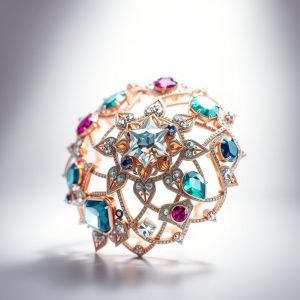
The Gilded Hammer: How Jewelry Design Competitions Are Forging the Future of Artistic Rebellion and Ethical Craftsmanship
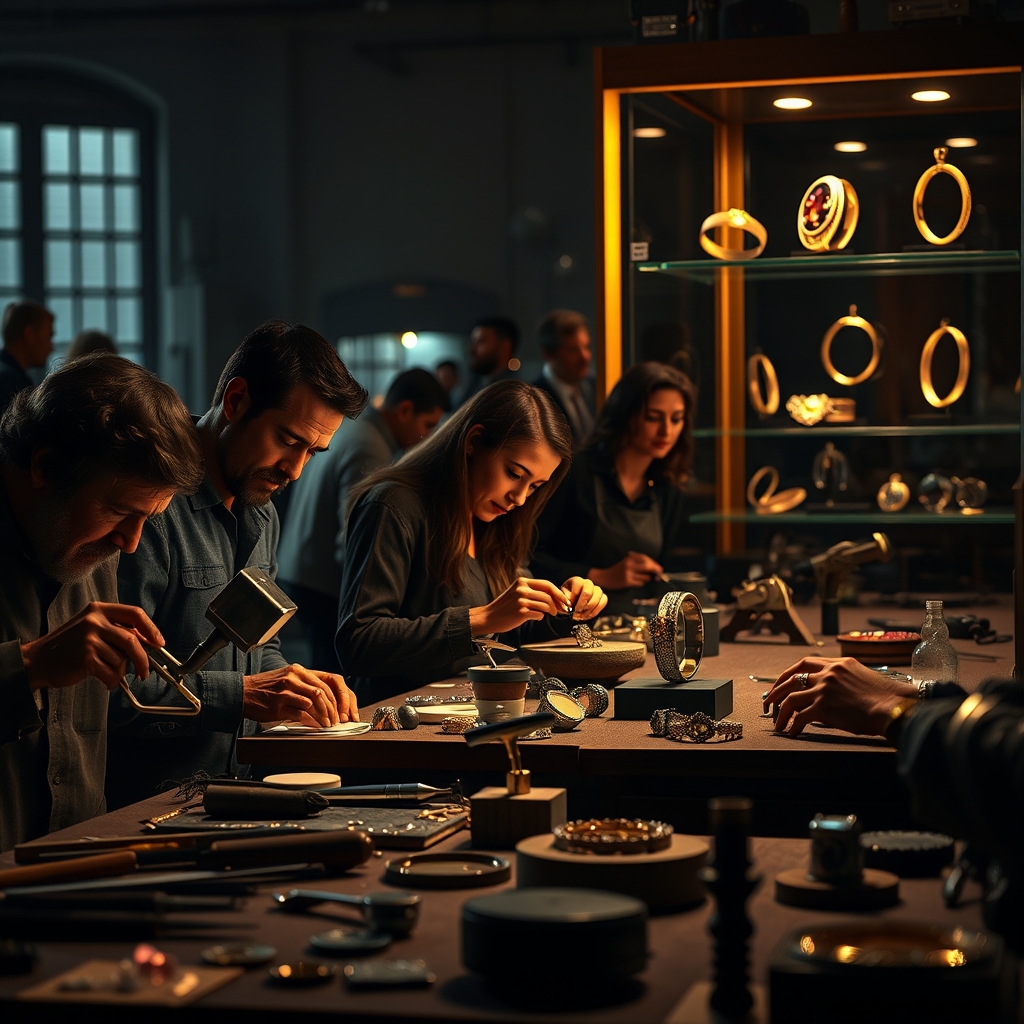
In the quiet hum of a goldsmith’s studio or the meticulous stroke of a gemstone carver’s tool, a revolution is unfolding—one that is as much about rebellion as it is about refinement. Jewelry design competitions, once seen as mere showcases of technical prowess, have evolved into battlegrounds of ideology, where artisans challenge the very foundations of tradition while redefining what it means to create with purpose. These global stages are no longer just about who can craft the most dazzling piece; they are about who can tell the most compelling story, who can push the boundaries of material and meaning, and who can prove that beauty and ethics are not mutually exclusive.
The New Language of Adornment
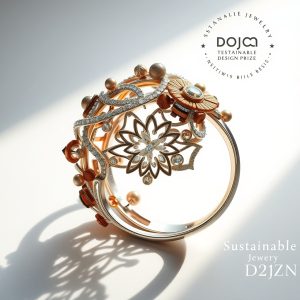
Gone are the days when jewelry was solely a symbol of wealth or status. Today’s most celebrated pieces are those that whisper of sustainability, shout of innovation, or murmur of cultural narratives long overlooked. Competitions like the International Jewelry Design Awards and the Sustainable Jewelry Design Prize have become platforms where designers wield their tools not just to shape metal, but to reshape perceptions. A necklace is no longer just a necklace—it is a manifesto, a protest, or a love letter to the planet.
Take, for instance, the rise of the Upcycled Jewelry Challenge, where designers transform discarded materials into objects of desire. What was once considered waste—broken ceramics, reclaimed wood, or even fragments of industrial metal—is now reborn as statement pieces that challenge the notion of luxury. These competitions force both creators and consumers to ask: What is value, really? Is it the rarity of the material, or the rarity of the idea behind it?
The Alchemy of Ethics and Aesthetics
The intersection of ethics and aesthetics has become the new frontier in jewelry design, and competitions are the laboratories where this alchemy is perfected. The Creative Metal Artist Award and the Avant-Garde Jewelry Award celebrate those who dare to merge form with function, beauty with responsibility. Designers are increasingly sourcing materials ethically, ensuring that every gemstone is conflict-free and every metal is traceable. But it’s not just about transparency—it’s about transformation. How can a piece of jewelry honor its origins while also transcending them?
Consider the work of a designer who uses lab-grown diamonds not as a compromise, but as a statement. These stones, identical to their mined counterparts in every way but their environmental impact, are redefining what it means to be a luxury material. Competitions like the Diamond Jewelry Design Challenge are amplifying these voices, proving that innovation doesn’t have to come at the earth’s expense. The message is clear: the future of jewelry is not just about what we wear, but how we wear it—and why.
The Stage for the Unseen
For emerging designers, competitions are more than just opportunities—they are lifelines. The Emerging Jewelry Designer Contest and the Student Jewelry Design Contest offer a rare chance for unknown talents to step into the spotlight, often catapulting them from obscurity to acclaim. These platforms democratize the industry, ensuring that the next generation of master artisans is not just skilled, but also seen. A single win can open doors to galleries, collaborations, and even bespoke commissions from collectors who crave the fresh perspective of a new voice.
But the impact of these competitions extends beyond individual careers. They are incubators for trends, shaping the direction of the entire industry. When a young designer wins the Concept Jewelry Competition with a piece that reimagines the relationship between the wearer and the worn, it sends ripples through the market. Suddenly, what was once considered radical becomes the new standard. The gilded halls of luxury brands take note, and soon, the avant-garde becomes the mainstream.
The Legacy of the Craft
At their core, jewelry design competitions are about legacy—not just the legacy of the pieces themselves, but the legacy of the ideas they carry. The Legacy Jewelry Design Award and the Fine Jewelry Design Trophy honor those who build upon the past while forging a path forward. These awards remind us that craftsmanship is not static; it is a living, breathing dialogue between generations. A goldsmith’s hammer today might strike the same metal as it did a century ago, but the intent behind each blow is entirely new.
This dialogue is perhaps most evident in the Gemstone Carving Contest, where artisans breathe new life into ancient techniques. A single stone, shaped by hands guided by both tradition and innovation, becomes a bridge between eras. These competitions ensure that the skills of the past are not lost, but rather reimagined for the future. They are a testament to the fact that true artistry is not about repetition, but evolution.
The Unfinished Symphony
The world of jewelry design competitions is a symphony in progress, with each note played by a designer, each movement shaped by a judge’s critique, and each crescendo marked by an award. But the music is far from over. As long as there are stories to tell, materials to redefine, and ethics to uphold, these competitions will remain the crucibles where the future of adornment is forged. They are not just about who wins, but about what winning represents—a commitment to pushing boundaries, to challenging norms, and to proving that the most beautiful things in the world are often the ones that carry the weight of meaning.
The hammer strikes, the metal bends, and with each careful movement, the definition of what jewelry can be expands. The stage is set, the tools are in hand, and the next masterpiece is waiting to be born—not just as an object of beauty, but as a beacon of what is possible when artistry and ethics collide.